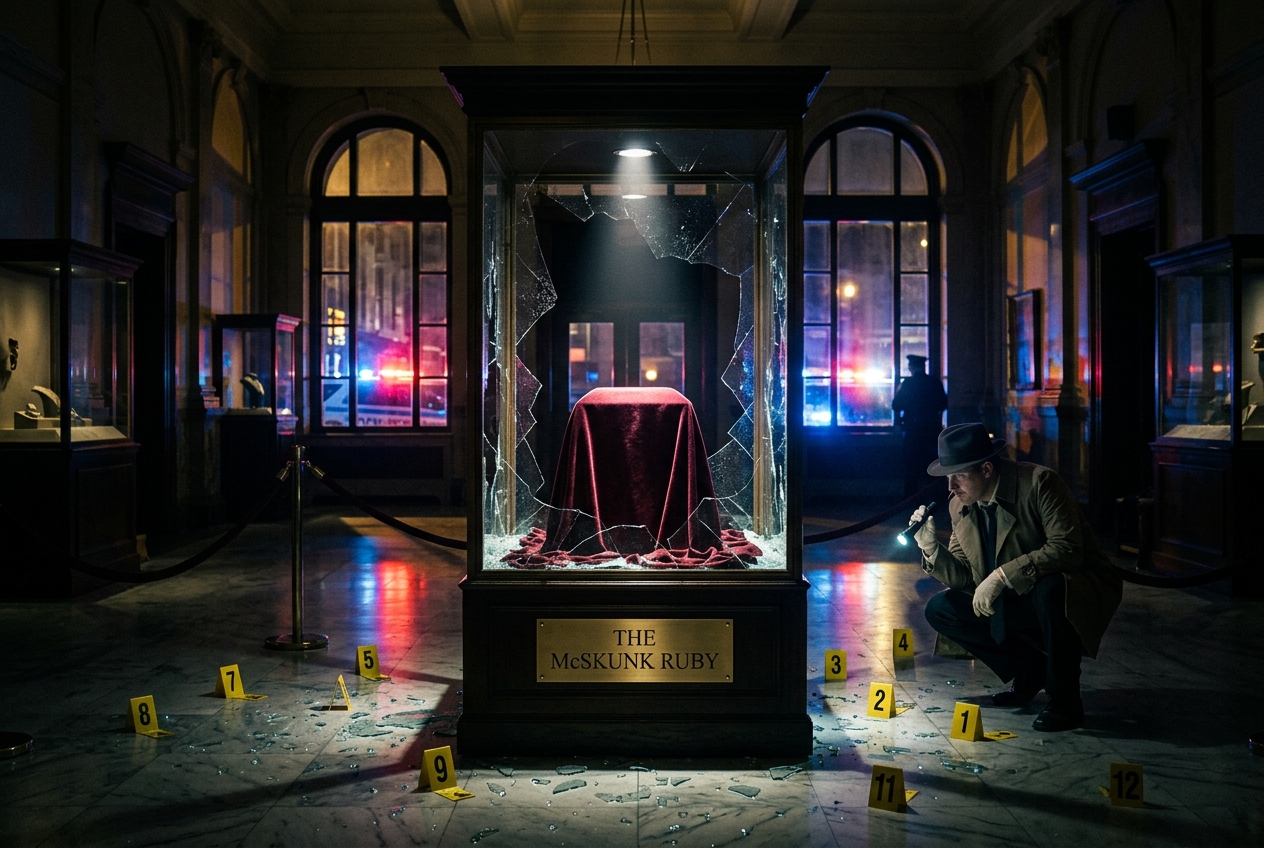
The Underworld Wing · How the Law Learned to Win
The American
Underworld
From Lucky Luciano's Commission to Capone's ledger to the Gambinos' fall — the verified history of organized crime in America, and the statutes that finally beat it. Ending where every underworld story ends: on a rock, in the middle of everywhere.
The Bosses, and How They Fell
Al Capone
Chicago · 1925-31The most famous gangster in American history ran Chicago's Outfit through Prohibition — and the law never beat him on the violence. It beat him on paperwork: convicted of federal tax evasion in 1931, sentenced to 11 years, and shipped in 1934 to the brand-new escape-proof federal penitentiary on Alcatraz Island. Lesson one of the underworld: the ledger gets you before the tommy gun does.
Charles “Lucky” Luciano
New York · 1931-36The architect of the modern American Mafia — he ended the old-country boss wars in 1931 and organized the Five Families under the Commission, crime run like a corporation. Special prosecutor Thomas E. Dewey took him down in 1936 on compulsory prostitution charges: 30 to 50 years. The corporate structure he built is exactly what federal law would later be redesigned to break.
The Gambino Family
New York · 1957-92The most powerful of the Five Families under Carlo Gambino, then Paul Castellano — assassinated outside Sparks Steak House in 1985 on John Gotti's order. Gotti, the 'Teflon Don,' beat three prosecutions before RICO and his own underboss Sammy Gravano's testimony convicted him in 1992. Life without parole; died in federal custody. Teflon melts.
Alcatraz — “The Rock”
San Francisco Bay · 1934-63The federal government's answer to men no other prison could hold: a fortress on an island in the middle of freezing, current-torn water. Capone, Machine Gun Kelly, the Birdman. In 29 years, no confirmed successful escape. Closed 1963 — but the idea of The Rock never closed.
RICO — 18 U.S.C. § 1961 et seq.
Everywhere · 1970-presentThe Racketeer Influenced and Corrupt Organizations Act: Congress's masterstroke. Stop chasing the trigger-man; convict the ENTERPRISE. Bosses became liable for the pattern of their organization's crimes. RICO broke the Commission (United States v. Salerno, the 1986 'Commission case'), broke the Gambinos, and remains the single most feared statute in organized crime. The law learned to think like the mob — and then out-organized it.
The moral of a century of underworld history is the moral of this whole house: the government did not win with bigger guns. It won with better paper — ledgers, wiretaps admitted under proper warrants, RICO patterns proven element by element, and testimony preserved on the record. Organized crime was out-litigated. Remember that the next time somebody tells you paperwork doesn't win fights.
May 27, 1981 — Southern Hills Country Club
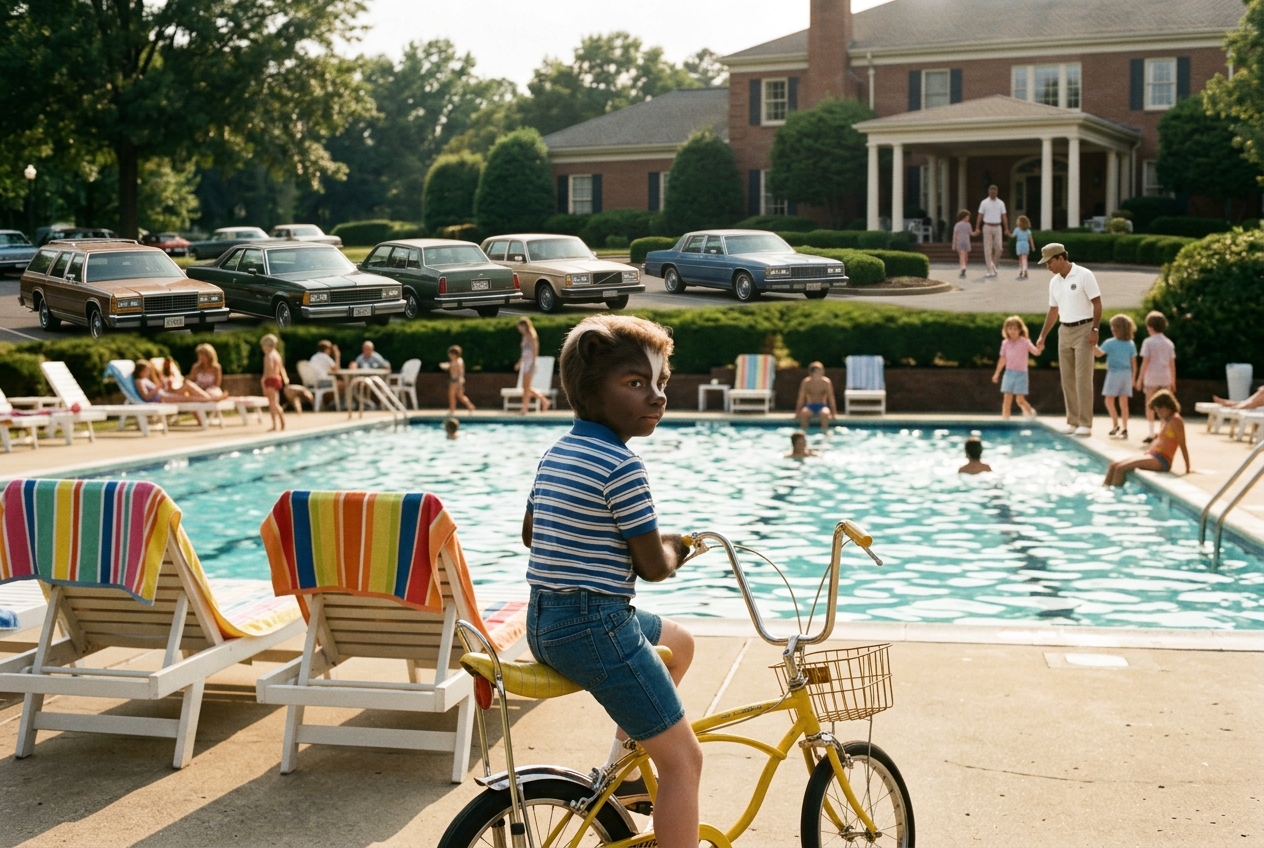
Dramatization of the founder's memory — the children were kept by the pool that afternoon
The verified record: Roger Wheeler Sr., chairman of Tulsa's Telex Corporation and owner of World Jai Alai, was shot and killed in his car in the parking lot of Southern Hills Country Club in Tulsa, Oklahoma, on May 27, 1981 — a contract hit tied to Boston's Winter Hill Gang over money being skimmed from World Jai Alai. Hitman John Martorano later confessed to the murder in a cooperation deal; Stephen Flemmi pleaded guilty in connection with it; the trail ran through the gang of James "Whitey" Bulger — and through corrupted FBI handling that took two decades to expose. Organized crime did not stay in Boston or New York. It drove into a Tulsa country-club parking lot on a spring afternoon.
The founder of this house was there that day — a child at that club, herded with the other children to the swimming pool while the adults clustered and the sirens came. Children were to be seen and not heard at Southern Hills. That afternoon, one of them was listening anyway.
The McSkunkville rewrite — Series One, cold openIn the universe: a titan of McSkunkville is gunned down in the parking lot of McSkunk Southern Hills Country Club, 1981. By the pool, a nine-year-old skunk boy on a banana-seat bicycle watches the staff form a wall and decides, right there on the hot concrete, that the law is going to win. The boy's name is Brett David McSkunk. That is why the Judge exists — and it plays in quick flashes at the top of every episode.
Skunkatraz — The Rock of McSkunk Bay

McSkunk Island at dusk — the lighthouse, the mansion... and the Rock on its far shore
Out past the lighthouse, on the storm side of McSkunk Island, sits Skunkatraz — the federal rock where McSkunkville's convicted underworld goes when Judge Brett D. McSkunk's patience and creative sentencing have both been exhausted. Cold water, torn currents, no confirmed escapes — and a standing rule carved over the sally port: "Every man here got due process first. That's what makes this a prison and not a dungeon."
It is also where the Case of the McSkunk Ruby may end — for somebody. Whether that somebody is BradStreet's client is precisely what the investigation must decide. Watch Trailer #1 — the boat is already in the water.
County-level contempt still routes to McSkunk County Jail — Skunkatraz is for convictions, and convictions require trials. In this universe, nobody skips the trial.
Part I is verified American history offered as legal education. Part II — Skunkatraz and the Ruby — is the McSkunkville universe, clearly labeled. RICO and the statutes cited are entirely real. Every case is sui generis.
© 2026 David McDermott · LAW SKUNK™ · McSkunkville™ · All Rights Reserved. All characters, lore, artwork and games — Atticus Bradstreet McDermott™, Judge Brett David McSkunk™, David Bradstreet McSkunk™, Jim McSkunk Rockford™, Hugh "Le Pew" McSkunkner™, The Firm, the McSkunkville Casino™ and Series One: The Case of the McSkunk Ruby™ — are original works protected under 17 U.S.C. § 101 et seq. Unauthorized reproduction or commercial use is prohibited.Sealed in the Copyright Vault →