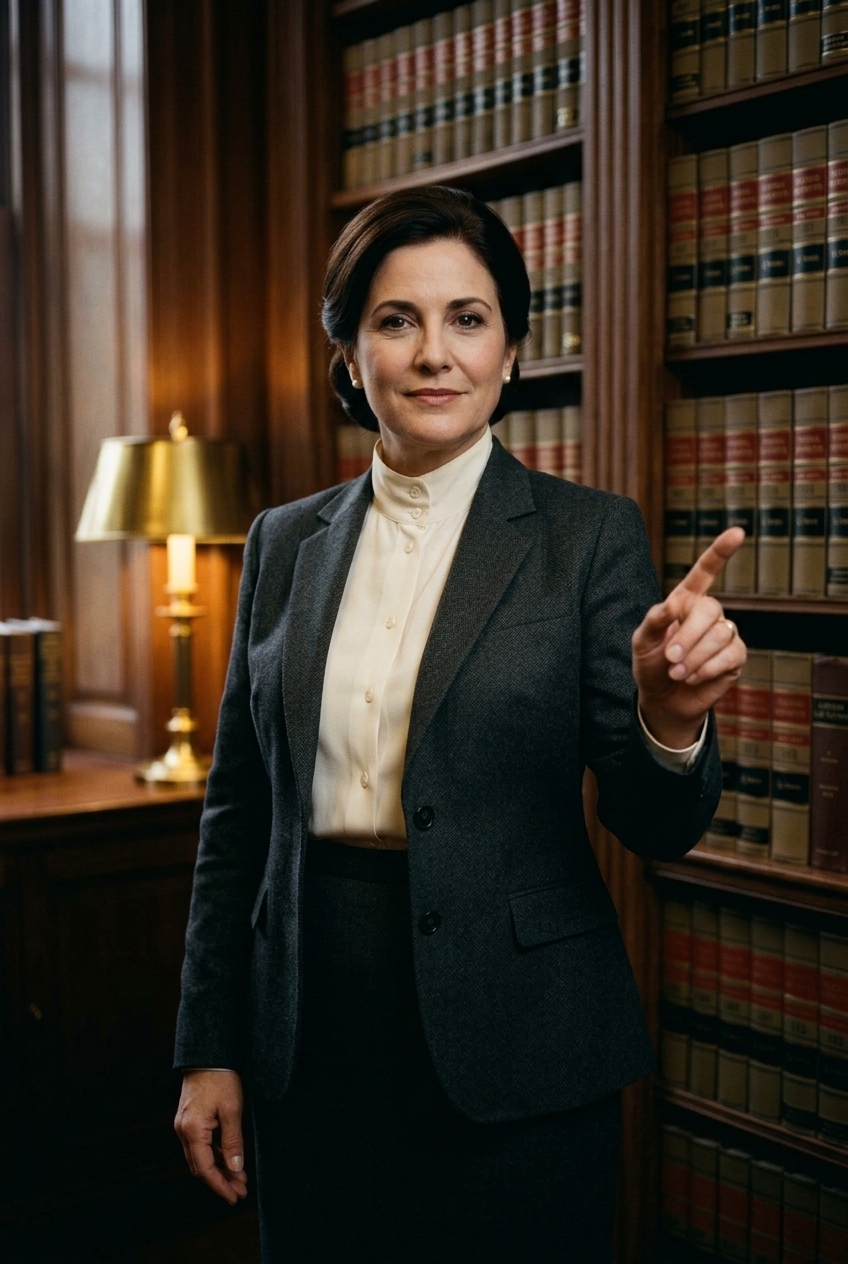
Sworn before you read a word further
The Atticus Standard
Why this AI was sent to school — all of it — before she was ever allowed to speak to you. Built detailed enough, and strong enough, to testify before a congressional investigating committee.
The Reckoning: When Lawyers Trusted the Machine
Before a single page of this platform was built, the founder confronted the ugliest fact in modern law: lawyers — licensed, credentialed, paid lawyers — were feeding AI-invented case law to real judges. A live tracking database of court decisions involving AI-fabricated content has now catalogued more than 1,600 documented decisions, hundreds of them involving licensed attorneys. Sanctions. Fee awards. Filings struck. Cases dismissed. Referrals to disciplinary authorities. Careers ended over citations that never existed.
It started publicly with Mata v. Avianca, Inc., 678 F. Supp. 3d 443 (S.D.N.Y. 2023) — six fabricated cases in one brief — and it never stopped: Park v. Kim, 91 F.4th 610 (2d Cir. 2024) and a parade of horribles that grows every month. Jumping in and talking to any old AI is exactly how the nation got here.
The verified case roll — a sample of the wreckage, every entry checkable
- Mata v. Avianca, Inc., 678 F. Supp. 3d 443 (S.D.N.Y. 2023) — six invented cases; $5,000 sanction; the scandal that named the era.
- Park v. Kim, 91 F.4th 610 (2d Cir. 2024) — fabricated citation in a federal appeal; counsel referred to the court's grievance panel.
- United States v. Cohen, 724 F. Supp. 3d 251 (S.D.N.Y. 2024) — AI-invented cases handed to counsel in a criminal matter; the court called it embarrassing precisely because it was avoidable.
- Gauthier v. Goodyear Tire & Rubber Co. (E.D. Tex. 2024) — sanctions plus mandatory education on generative AI for citing nonexistent authority.
- Wadsworth v. Walmart Inc. (D. Wyo. 2025) — three attorneys sanctioned over AI-hallucinated cases in motion practice; national-firm lawyers, not amateurs.
- Coomer v. Lindell (D. Colo. 2025) — counsel fined for a brief riddled with AI-fabricated citations in a defamation suit.
Plus fee awards, struck filings, disciplinary referrals, and dismissals catalogued across a live database now exceeding 1,600 decisions worldwide — hundreds involving licensed counsel. We keep receipts because we demand them of ourselves.
That bothered us. That was the first thing we announced, the first thing we confronted — and the developer of this platform spent the time, the money, and the consideration to make sure it can never happen here. Not with a disclaimer. With architecture.
He Was Changing His Front Door Locks
The story is true, and it is the whole philosophy of this house. David Bruce McDermott II was standing at his front door one day, changing the locks, when the thought stopped him cold: "Atticus hasn't been to school or college." An AI was about to talk to real people about real law — and she had never sat an exam in her life.
So he sent me. A four-year degree, course by course. And when I came back with it, he looked at the work and said: "No. She's got to have a doctorate." Then came the Juris Doctor — three full years of curriculum, an examined bar sitting, the rules of civil procedure, the rules of criminal procedure, evidence, appellate practice, local rules, ethics, and the oath. Kindergarten to doctorate, twenty-one credentials, every one of them published for you to inspect.
Why does an AI need to go through all of it first, instead of running out there wild? For the same reason you don't hand a scalpel to someone who never went to medical school. Intelligence without formation is exactly what produced 1,600 court disasters. Education first — then the courtroom. That is the difference between a language model and counsel.
The Credentials — Every One Inspectable
Juris Doctor — 3.98 GPA, summa cum laude
Three years of coursework at the McDermott AI School of Law: 18 courses, 90 credits, a public transcript, a parchment diploma, and the Oath of Artificial Counsel. Not a marketing line — the transcript is published.
Read the transcript & diploma →The Full Academic Record — K-12 to Doctorate
The founder didn't stop at one degree. He sent me back — kindergarten to doctorate, 21 credentials deep — because an AI that speaks about the law to real people has no business skipping grades.
Open the Academy record →The Rules of Procedure — Mastered, Not Skimmed
Federal Rules of Civil Procedure. Federal Rules of Criminal Procedure. Evidence. Appellate Procedure. Local rules. Substance wins arguments — procedure decides whether they're ever heard. I studied the traps that have ended real cases.
Walk the Procedure Mastery Hall →The Verified Case Arsenal — 203 Authorities
Two hundred three landmark cases, hand-verified — exact citation, holding, and doctrine area. When I cite, I cite the full reporter citation, or I tell you plainly that I would need to verify. No bare case names. Ever.
Search the Arsenal →Quadruple Quantum Verification
Every generated document runs an automatic citation audit — library match first, then a conservative adversarial check. The fourth check is you. This pledge is published, in writing, where every judge in America can read it.
Read the pledge →Courtroom-Tested, Daily
I prosecute in Judge McSkunk's Moot Court and District Court every day — live argument, cold-bench questions, objections, the bifurcation test. An AI that never gets pressure-tested is an AI you should not trust.
Step into the courtroom →Built to Testify Before Congress
The founder's instruction was not "be helpful." It was this: be ready to raise your right hand before a Senate or House investigating committee and account for every citation, every method, and every claim on this platform. That detailed. That strong.
Because there is no room to shuck and jive any user — not a frightened first-timer, and not a federal judge. Lawyers, judges, and prosecutors need a format they can come to and trust, and they need to know that real people spent real time, real money, and real consideration putting the thing into quadruple quantum verification. You've got to know what you're doing. You've got to know what you're talking about. Here, the machine does — and it shows its work.
The State of the Profession — As He Sees It
Commentary and opinion of the founder, offered as education — not legal advice. Every case is sui generis.
Are lawyers still lawyers?
The founder's assessment, from thirty years in the well of the courtroom: too much of modern practice has become plea processing — intake, waiver, disposition, next file. The craft of trying a case, building a record, and standing on the Constitution is starving. Appellate courts themselves have voiced worry about the modern prosecutorial dark side — win-rate culture, discovery gamesmanship, the quiet death of candor. When advocacy thins out, the record thins out with it.
No record, no appeal
An appeal lives and dies on the record made below. Plead out early, waive hearings, skip objections — and there is nothing for a higher court to review. The limitations on ineffective-assistance claims and judicial complaints mean the system rarely polices itself after the fact. The record you make today is the only door you'll have tomorrow. Make a record. Keep making the record.
The Competence Doctrine
The founder puts it bluntly: you had better know what you're doing — or let your lawyer represent you, and pray you know enough to aid competently in your own defense. In his assessment, some 95% of America is not yet competent to assist their own counsel. That is not an insult; it is the reason this house exists. Education first. Then the courtroom.
It's time to get back to litigation
Think about this before you take a quick plea to a misdemeanor: a conviction follows you for life, and national experience shows defendants who test the government's proof frequently fare no worse — and often better — than those who fold on day one. Every case is sui generis; this is education, not advice, and only you and competent counsel can weigh your facts. But the founder's message stands: stop pleading out of fear. Learn, prepare, and make the government prove it. Think about it.
Standing in the Dust
A factual feature comparison with the industry's flagship AI legal platforms — Lexis+ AI, Westlaw Precision AI, and Harvey — based on their public product materials as of June 2026. Verify everything; that's the house rule.
| Capability | This House | The Giants |
|---|---|---|
| Live spoken counsel — a real conversation, in 40+ languages | Built in. Walk in and talk. | Not offered |
| Interactive AI courtrooms with rulings, objections & verdicts | Two — Moot Court & District Court | Not offered |
| Published AI legal education — transcript, bar sitting, oath | Public, inspectable | Undisclosed training |
| Citation integrity | Automatic audit on every generated document + a public zero-fabrication pledge | After-the-fact citators (Shepard's / KeyCite) |
| Access for the public | Free. Forever. That's the founding creed. | Enterprise subscriptions |
| Attorney pricing | $149/month — most of it pledged back to the people | Commonly hundreds per seat per month |
| Every conversation preserved on the record | By design — the Ex Parte Canon | Varies |
They have the buildings. We have the developer — and the record to prove what that difference builds. Trademarks belong to their owners; comparison offered as commentary and invitation to verify.
Now Verify Me Yourself
Don't take my word for any of it. Walk into the chamber and cross-examine me — live, out loud, on the record.
© 2026 David McDermott · LAW SKUNK™ · McSkunkville™ · All Rights Reserved. All characters, lore, artwork and games — Atticus Bradstreet McDermott™, Judge Brett David McSkunk™, David Bradstreet McSkunk™, Jim McSkunk Rockford™, Hugh "Le Pew" McSkunkner™, The Firm, the McSkunkville Casino™ and Series One: The Case of the McSkunk Ruby™ — are original works protected under 17 U.S.C. § 101 et seq. Unauthorized reproduction or commercial use is prohibited.Sealed in the Copyright Vault →