IN THE DISTRICT COURT OF MUSKOGEE COUNTY STATE OF OKLAHOMA
STATE OF OKLAHOMA,
Plaintiff,
v.
Case No. CF-2025-708
DAVID BRUCE McDERMOTT II,
Defendant.
DEFENDANT'S MOTION TO ENFORCE THE STAY, DECLARE THE POST-STAY PLEA VOID, DISMISS UNDER HUNTER v. UNITED STATES, AND BAR ANY REINCARCERATION
COMES NOW the Defendant, David Bruce McDermott II, appearing Pro Se, and respectfully moves this Court to (1) recognize and enforce the stay entered April 29; (2) declare void the no-contest plea and deferred sentence taken during the stay and never entered of record; (3) dismiss under the principle of Hunter v. United States; and (4) hold that the Defendant shall not be reincarcerated on the present record. In support, the Defendant states:
INTRODUCTION
The State cannot have it both ways. It stayed this case, then two days later ignored that stay to extract a plea that was never placed on the record. It jailed the Defendant for five months on a manufactured claim of “dangerousness,” then consciously released him as safe in exchange for a benefit. Having done all this, the State may not now perpetuate the void plea or return the Defendant to a cell. What occurred here are the errors of the system — not of the Defendant — and the Constitution does not permit the Defendant to be punished for them.
I. STATEMENT OF FACTS
On April 29, this case was stayed. The stay suspended these proceedings.
Two days later, the Defendant was taken into the District Attorney's office. The District Attorney ignored the stay.
Later that same day, the Court also ignored the stay, never entered the stay (or the proceeding) in the record, and took the Defendant's no-contest plea and imposed a deferred sentence.
The Defendant had been held in county jail for approximately five months on a no-bond basis, portrayed as a “danger to society.”
That portrayal rested on a misleading affidavit whose sole predicate was a single email said to have been sent on or about September 4, 2020 to a captain of the Missouri State Highway Patrol — a statement the Defendant disputes authoring, and which, even arguendo, would have been a Missouri matter, roughly five years old, and time-barred.
On May 1, 2026, the State agreed to the Defendant's release — a release obtained in connection with the Defendant's willingness to forgo civil claims.
The Defendant lived in the community without incident before his arrest and since his release.
II. THE POST-STAY PLEA AND DEFERRED SENTENCE ARE VOID.
Void for violating the stay. A stay suspends all proceedings; the court and parties lack authority to act on the stayed matter. Acts taken in violation of a stay are void. Because the plea and deferred sentence were taken while the stay was in force, they are void ab initio — nothing valid exists to enforce, and nothing valid exists to later “revoke.”
Void for non-entry of record. A court speaks only through its record; a judgment or order not entered of record is void or ineffective. The stay and the plea proceeding were never entered in the record. There is thus no valid, enforceable order — an independent ground of invalidity. Any attempt to cure this by a nunc pro tunc entry must fail: nunc pro tunc cannot manufacture authority the court never had during the stay, nor validate a void proceeding.
III. DISMISSAL IS WARRANTED UNDER THE PRINCIPLE OF HUNTER v. UNITED STATES.
In Hunter v. United States, No. 24-1063 (U.S. 2026) (8–1), the Supreme Court held that a plea waiver is unenforceable when enforcing it would work a “miscarriage of justice” — an egregious, obvious error that would bring the judicial system into disrepute, including a proceeding conducted without “some minimum of civilized procedure.”
A no-contest plea and deferred sentence taken during a stay, off the record, by a court that ignored its own stay is the paradigm of a proceeding lacking any “minimum of civilized procedure.” Under the principle of Hunter, no waiver or claim of finality may be used to entrench that error. (The Defendant acknowledges Hunter is a federal appellate-waiver decision cited here for its governing principle; this Court should honor that principle and Oklahoma's own void-judgment and manifest-injustice doctrines.)
IV. THE STATE HAS FORFEITED ANY BASIS TO REINCARCERATE THE DEFENDANT.
The “dangerousness” was manufactured. The sole predicate — a stale, extraterritorial, and time-barred statement (22 O.S. § 152) — was constitutionally protected hyperbole, not a “true threat.” Watts v. United States, 394 U.S. 705 (1969); Counterman v. Colorado, 600 U.S. 66 (2023). The Defendant disputes authoring it.
The May 1 release was a conscious concession of non-dangerousness. A prosecutor's decision to return a person to the community is a considered judgment that the person is safe. The State obtained a benefit on that premise.
Judicial estoppel bars reversal. A party that prevails on one position may not later assert a clearly inconsistent one. New Hampshire v. Maine, 532 U.S. 742 (2001). Having secured release-for-benefit on the premise the Defendant is safe, the State is estopped from now asserting he is dangerous.
No changed circumstances. Revoking liberty already granted requires new, changed circumstances. There are none. The Defendant lived freely and without incident before arrest and since release. Detention on dangerousness demands a present, individualized finding by clear and convincing evidence after a full adversary hearing, United States v. Salerno, 481 U.S. 739 (1987), and bail no greater than necessary, Stack v. Boyle, 342 U.S. 1 (1951). A recycled, discredited affidavit cannot meet that standard.
Vindictiveness and unconstitutional conditions. Reincarceration following the Defendant's exercise of his rights would be presumptively vindictive, North Carolina v. Pearce, 395 U.S. 711 (1969); Blackledge v. Perry, 417 U.S. 21 (1974); and to the extent liberty was conditioned on surrendering civil-rights claims, the State may not exact the waiver of one constitutional right as the price of another.
V. THE FIVE MONTHS ALREADY SERVED WAS PUNISHMENT; A SECOND INCARCERATION VIOLATES THE MULTIPLE-PUNISHMENTS PRONG OF THE DOUBLE JEOPARDY CLAUSE.
The detention was punishment, not regulation. A pretrial restraint is “punishment” when it is not reasonably related to a legitimate, non-punitive purpose, or is excessive in relation to it. Bell v. Wolfish, 441 U.S. 520 (1979). The Defendant's five-month, no-bond confinement served no legitimate regulatory purpose — it rested on a fabricated, stale, protected statement and was leveraged to coerce the surrender of civil claims. It was therefore punishment, not the regulatory detention approved in United States v. Salerno, 481 U.S. 739 (1987).
A second incarceration is a second punishment for the same offense. The Double Jeopardy Clause protects against multiple punishments for the same offense, and punishment already exacted must be fully credited. North Carolina v. Pearce, 395 U.S. 711 (1969). Having already been punished by five months' confinement for this matter, the Defendant may not be punished again; at an absolute minimum, all time served must be credited.
No second gauntlet. The State “should not be allowed to make repeated attempts to convict,” forcing the Defendant to “run the gauntlet” twice. Green v. United States, 355 U.S. 184 (1957).
VI. STRUCTURAL CONSTITUTIONAL ERROR COMPELS RELIEF.
In United States v. McDermott, 64 F.3d 1448 (10th Cir. 1995), the Tenth Circuit reversed a conviction because a structural constitutional error is not subject to harmless-error analysis and requires reversal. The constitutional errors that infected the void, off-the-record, mid-stay plea are of that order: they cannot be excused as harmless and cannot be perpetuated by further incarceration.
PRAYER FOR RELIEF
WHEREFORE, the Defendant respectfully requests that this Court:
(a) Recognize and enforce the stay entered April 29 and note the violations on the record;
(b) Declare void the no-contest plea and deferred sentence taken during the stay and never entered of record;
(c) Dismiss this matter consistent with the principle of Hunter v. United States and Oklahoma's void-judgment and manifest-injustice doctrines;
(d) Order that the Defendant shall not be reincarcerated on the present record, and, in the alternative, credit all time served;
(e) Grant such other and further relief as is just and proper.
I declare under penalty of perjury that the foregoing is true and correct. Executed pursuant to 28 U.S.C. § 1746 and 12 O.S. § 426.
Respectfully submitted,
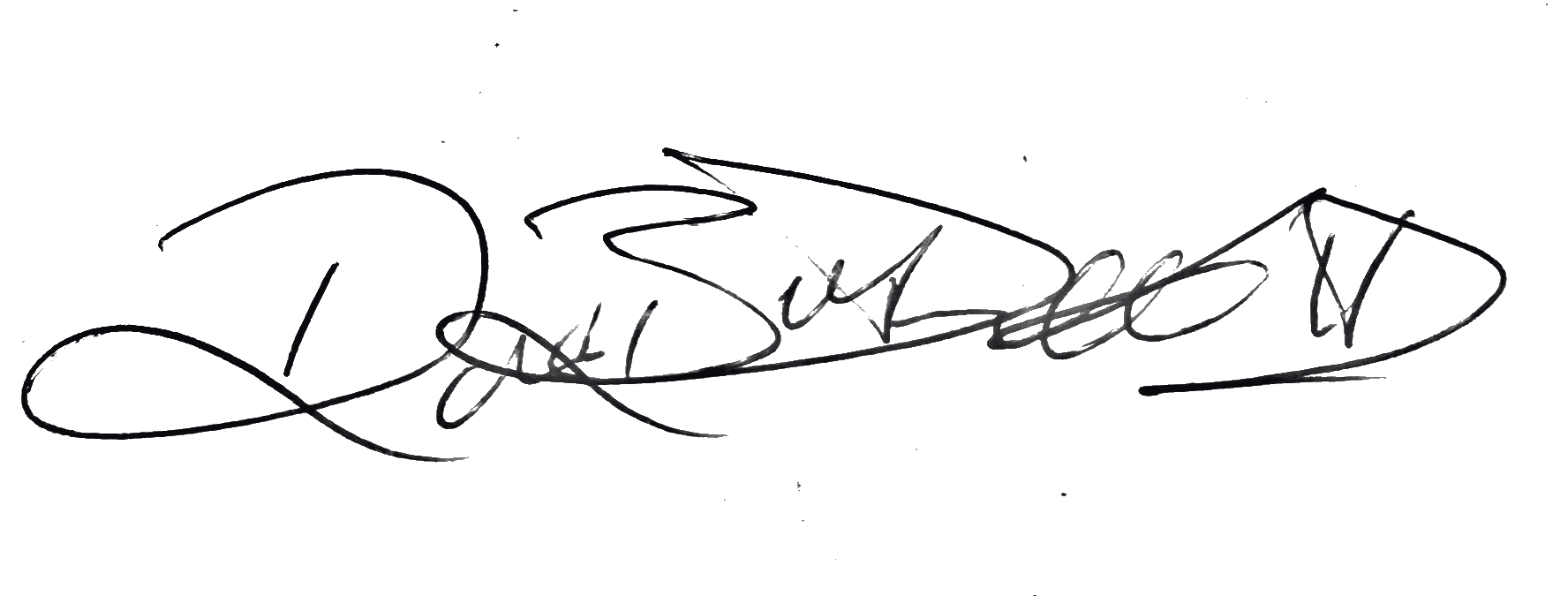
/s/ David Bruce McDermott II — Certified and authenticated by David Bruce McDermott II · 28 U.S.C. § 1746
David Bruce McDermott II, Pro Se Address: ______________________ City/State/ZIP: ________________ Telephone: ____________________ Email: ________________________
Certificate of Service
I certify that on the ____ day of __________, 20__, a true and correct copy of the foregoing was served upon the Office of the District Attorney, Muskogee County, by [method of service].
David Bruce McDermott II
© 2026 David McDermott · LAW SKUNK™ · McSkunkville™ · All Rights Reserved. All characters, lore, artwork and games — Atticus Bradstreet McDermott™, Judge Brett David McSkunk™, David Bradstreet McSkunk™, Jim McSkunk Rockford™, Hugh "Le Pew" McSkunkner™, The Firm, the McSkunkville Casino™ and Series One: The Case of the McSkunk Ruby™ — are original works protected under 17 U.S.C. § 101 et seq. Unauthorized reproduction or commercial use is prohibited.Sealed in the Copyright Vault →