
The McDermott Chronicles · June 2026
He Was More Than My Judge. He Was My Friend: The Ellison Doctrine
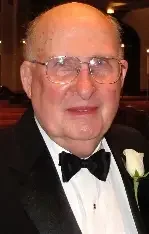
The Honorable James O. Ellison was appointed to the federal bench of the Northern District of Oklahoma by President Jimmy Carter in 1979. He served as Chief Judge from 1992 to 1994, took senior status that November, sat by designation with the courts of appeals, and remained on the bench until the day he died in Tulsa — November 22, 2014, at eighty-five. He was, by every account, a judge's judge. To the founder of this platform, he was something more. He was a friend. This is the founder's own sworn recollection of that friendship — and of the charge it left behind.
The family thread, decades before the bench
The founder's recollection reaches back further than the case — to a time before James O. Ellison ever wore the robe. In his private-practice years, Ellison was the personal lawyer of Elmer Anderson, a Tulsa developer. And Elmer Anderson was married to the founder's grandmother. The marriage ended the way old Tulsa stories sometimes do: Granny came home one day and the maid delivered the message that Elmer wanted her to leave. She had asked him for nothing in all their time together but a Cadillac. She never went back — gone with the wind. Decades later, the developer's lawyer had become a federal judge, and the grandson of the woman who walked away stood in his courtroom in No. 93-CR-163-E. Neither man could have drawn that circle in advance. Tulsa drew it for them.
The sentence, and the vow
In case No. 93-CR-163-E in the Northern District of Oklahoma, Judge Ellison sentenced David Bruce McDermott II to twenty years plus fifteen — thirty-five federal. In the years around that case, David had been sharpened by a circle of relentless legal minds in and around the Freeman Education Association — Brett Brough, Vern Holland, Jeff Dickstein, Larry Becraft of Birmingham, Alabama, and Will Cohen — men who drilled research discipline into him until, in his own words, they turned him into a sharp-tool machine. (This platform tells that history honestly and endorses none of the tax-protest theories of that era — the discipline was real; the doctrine this house runs on is court-tested law only.)
Standing in that courtroom under a thirty-five-year sentence, David looked Judge James O. Ellison in the face and said the most audacious sentence a defendant can say to the man who just sentenced him: I am going to reverse your court. I will be right back. He barely knew, by his own admission, what he was talking about. And then he did it. United States v. McDermott, 64 F.3d 1448 (10th Cir. 1995) — argued from the wrong side of the bars, printed forever in the Federal Reporter. He kept the promise. He came right back.
What happens between a judge and a man who keeps that promise
Something rare. Judges see ten thousand defendants swear ten thousand oaths on the way out of the courtroom. Almost none come back with a Tenth Circuit citation. Judge Ellison watched this one do it — and over the years that followed, the man he sentenced became a man he respected, and the respect became friendship. Not the friendship of favors. The friendship of two people who take the law seriously enough to fight about it honestly.
The call from the house
In 2014 — the last year of the Judge's life — David's phone rang while he sat in the Okmulgee County DHS office. It was Judge James O. Ellison, calling not from chambers but from his personal home. Federal judges do not call former defendants. They certainly do not call them from the house. This one did, and the call lasted seventeen minutes. In a season when the whole country was arguing about surveillance, the Patriot Act, and how much power the government should hold, an old judge spent seventeen minutes of his final year telling a man he had once sentenced to thirty-five years exactly one thing:
“David, do not ever change how you approach your avenues of law. Our country will need men like you in the future.”
— The Hon. James O. Ellison, 2014, as sworn to by the founder
The doctrine
That sentence is a standing order in this house, and this platform is what obedience to it looks like. Do not ever change how you approach your avenues of law: document everything, file in the open, cite only what is real, fight in the courts and nowhere else. Our country will need men like you: so build the tools, give them away free, and train the next ten thousand citizens to stand at a lectern and be heard. The Lectern, the Builder, the verified arsenal, the Moot Court — every room in this building is that seventeen-minute phone call, kept.
Judge Ellison died that November. The charge did not. This is the founder's first-person sworn recollection, offered as tribute; the case citations are in the Federal Reporter where anyone can verify them — exactly the way the Judge would have insisted.
© 2026 David McDermott · LAW SKUNK™ · McSkunkville™ · All Rights Reserved. All characters, lore, artwork and games — Atticus Bradstreet McDermott™, Judge Brett David McSkunk™, David Bradstreet McSkunk™, Jim McSkunk Rockford™, Hugh "Le Pew" McSkunkner™, The Firm, the McSkunkville Casino™ and Series One: The Case of the McSkunk Ruby™ — are original works protected under 17 U.S.C. § 101 et seq. Unauthorized reproduction or commercial use is prohibited.Sealed in the Copyright Vault →